China NHC Newly Approved 7 New Food Raw Materials and 7 New Food Additives
AuthorEthan Koh
PublishedJune 30, 2026
Read Time5 min read
CategoryIndustry News
On May 27, 2026, National Health Commission of the People’s Republic of China (NHC) issued an announcement (No. 2 of 2026) for “Three New Foods” with 16 products approved, including 7 new food raw materials and 7 new food additives.
Details are as follows:
New food raw materials (7 types)
Peony seed oil
Name
Peony seed oil
Basic information
Source: seeds of Paeonia ostii T. Hong & J. X. Zhang and Paeonia rockii (S. G. Haw& Lauener) T. Hong & J. J. Li
Brief introduction of production process
Made from the seeds of Paeonia ostii T. Hong & J. X. Zhang and Paeonia rockii (S. G. Haw& Lauener) T. Hong & J. J. Li, produced through processes such as pressing, decolorization, and deodorization.
Specifications
Appearance
Light yellow to yellow oily liquid
Fatty acid composition (percentage of total fatty acids):
Oleic acid (C18:1), %
≥ 21.0
Linoleic acid (C18:2), %
≥ 25.0
Linolenic acid (C18:3), %
≥ 38.0
Other information
1. The scope of use does not include infant and young children foods.2. Food safety indicators shall comply with the requirements for vegetable oils and fats as specified in the current Chinese National Food Safety Standards.
Nekemias grossedentata leaf polyphenols
Name
Nekemias grossedentata leaf polyphenols
Basic information
Source: leaves of Nekemias grossedentata (Hand.-Mazz.) J. Wen& Z. L. Nie
Brief introduction of production process
Produced using the leaves of Nekemias grossedentata (Hand.-Mazz.) J. Wen& Z. L. Nie as raw material, processed through a series of steps including ethanol extraction, decolorization, concentration, filtration, and drying.
Recommend level
≤ 470 mg (calculated based on a total polyphenol content of 85 g/100g; for products exceeding this level, the intake should be adjusted based on the actual content).
Other information
1. Scope of use and maximum dosage:- dairy and dairy products: modified milk and flavored fermented milk (0.5 g/kg), modified milk powder calculated based on the reconstituted liquid mass, cheese, processed cheese, cheese products, and condensed milk calculated based on the multiplication factor of raw milk.- beverages: liquid beverages ≤50 mL packaging (5 g/kg), 51–500 mL packaging (0.5 g/kg), and solid beverages calculated based on the reconstituted liquid mass.- jelly: 8 g/kg.- cocoa products, chocolate, and chocolate products (including cocoa butter substitute products): 8 g/kg.- candy: 25 g/kg.- frozen desserts: 5 g/kg.- alcoholic beverages: 2.5 g/kg.- preserved fruits: 5 g/kg.2. Infants, pregnant women, and breastfeeding mothers should avoid consumption. Labels and instructions must clearly indicate the unsuitable populations and consumption limits.3. Quality standards and food safety indicators refer to the appendix.
Cyclocarya paliurus leaf polyphenols
Name
Cyclocarya paliurus leaf polyphenols
Basic information
Leaves of Cyclocaryapaliurus (Batalin) Iljinsk.
Brief introduction of production process
Made from leaves of Cyclocaryapaliurus (Batalin) Iljinsk., produced through processes such as hot water extraction, filtration, concentration, and drying.
Recommended intake
≤ 3 g/day
Other information
1. Scope of use and maximum dosage:- dairy and dairy products: modified milk and flavored fermented milk (3 g/kg), modified milk powder calculated based on the reconstituted liquid mass, cheese, processed cheese, cheese products, and condensed milk calculated based on the multiplication factor of raw milk.- beverages: liquid beverages ≤50 mL packaging (30 g/kg), 51–500 mL packaging (3 g/kg), and solid beverages calculated based on the reconstituted liquid mass.- jelly: 48 g/kg.- cocoa products, chocolate, and chocolate products (including cocoa butter substitute products): 48 g/kg.- candy: 60 g/kg.- frozen desserts: 30 g/kg.- alcoholic beverages: 15 g/kg.- preserved fruits: 30 g/kg.2. Infants, pregnant women, and breastfeeding mothers should avoid consumption. Labels and instructions must clearly indicate the unsuitable populations and consumption limits.3. Quality standards and food safety indicators refer to the appendix.
Bifidobacterium animalis subsp. lactis XLTG11
Name
Bifidobacterium animalis subsp. lactis XLTG11
Other information
1. The strain is approved and included in the List of Microorganisms That Can Be Used in Food.2. The food safety indicators shall comply with the requirements of the National Food Safety Standard for Microbial Preparations Used in Food Processing (GB 31639). Cronobacter spp. must not be detected (per 100 g).
Mycoprotein from Fusarium compactum
Name
Mycoprotein from Fusarium compactum
Basic information
Camelina sativa (L.) Crantz
Brief introduction of production process
Produced using the Fusarium compactum strain MM-135 as the production organism, through a process involving fermentation, nucleic acid removal, inactivation, and filtration.
Other information
1. Infants, toddlers, pregnant women, nursing mothers, and individuals allergic to edible fungi should not consume this product; the label and accompanying instructions shall clearly indicate the unsuitable populations.2. Quality specifications and food safety indicators are provided in the Appendix.
Chlorella pyrenoidosa
Name
Chlorella pyrenoidosa
Basic information
Genus Chlorella (Family Chlorellaceae)
Brief introduction of production process
Chlorella pyrenoidosa is produced through processes including cultivation, separation, washing, and drying.
Recommended intake
≤ 20 g/day
Specifications
Properties
Dark green to black-green powder/granules
Pale yellow to yellow powder/granules
Protein, g/100g ≥
50.0
35.0
Moisture, g/100g ≤
7.0
7.0
Ash, g/100g ≤
7.0
7.0
Other information
1. The scope of use does not include infant and young children foods.2. Food safety indicators shall be implemented in accordance with the provisions regarding algae and algae products set forth in current national food safety standards.
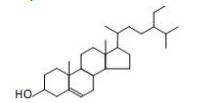
Plant sterol
New food additives (7 types)
New food enzymes
No.
Enzyme
Source
Donor
1
Xylanase
Bacillus licheniformis
Chryseobacterium
2
Cellulase
Trichoderma reesei
Trichodermareesei
The quality specifications for enzymes used in the food industry shall comply with the provisions outlined in the National Food Safety Standard for Food Additives – Enzymes for Food Industry (GB 1886.174).
New food additives with expanded scope
Name
Function
Cat.
Food Name
Maximum Level(g/kg)
Note
Calcium alginate
Thickene, stabilizer, and gelling agent
01.06.04
processed cheese and cheese products
5.0
–
05.01.02
chocolate and chocolate products, cocoa products (excluding those under category 05.01.01);
5.0
16.06
puffed food
3.0
Food nutrition enhancers with expanded scope
Name
Cat.
Food Name
Maximum Level (g/kg)
Note
Calcium 6S-5-Methyltetrahydrofolate
13.05
Other foods for special dietary uses (excluding categories 13.01–13.04) (limited to nutritional supplements for complementary foods)
Expressed as folic acid, complies with the provisions regarding the use of folic acid in nutritional supplements for complementary foods as stipulated in the National Food Safety Standard: Nutritional Supplements for Complementary Foods (GB 22570).
–
Food additives with supplementary quality specification
2’-fucosyllactose,2’-FL
Application scope, usage level and specifications: The application scope and specification for 2′-Fucosyllactose shall follow the Announcement No. 8 of 2023 issued by the National Health Commission (except for the information on the production strains used for 2′-Fucosyllactose production in Appendix C). The information on the production strains for this new nutrition enhancer is provided in the table below.
Nutrition enhancer
Source
Donor
2’-fucosyllactose
Escherichia coli C43 (DE3)
Bacillus cereus
Kluyveromyces lactis K-12BW25113
Mycobacterium spp.
3’-sialyllactose sodium salt, 3’-SL
Application scope, usage level and specifications: The application scope and specification for 3′-SL shall follow the Announcement No. 1 of 2026 issued by the National Health Commission (except for the information on the production strains used for 3′-SL production in Appendix A). The information on the production strains for this new nutrition enhancer is provided in the table below.
Nutrition enhancer
Source
Donor
3′-SL
Escherichia coli BL 21 (DE3)
Haemophilus parahaemolyticus
Kluyveromyces lactis K-12MG1655
Neisseria meningitidis
Lacto-N-neotetraose
Function: food nutrition enhancer
Quality Specifications
The quality specifications for this substance shall be implemented in accordance with Announcement No. 8 of 2023 issued by the National Health Commission (except for the production strain information for Lacto-N-neotetraose listed in Appendix D). The production strain information for this new variety of nutritional fortifier is shown in the table below.
At the 6th China International Consumer Products Expo (CICPE), Metagenics Bio Q‑Absorb Ubiquinol was recognized as an “Expo Baby”, an honor awarded to innovative health products from China and overseas that are newly launched or preparing for market entry during the Expo.
HPA-Global’s annual Probiotics China Seminar and Innovative Ingredients China Seminar were held on June 15–16, 2026, in the Education Hub of the Hi & Fi Asia-China Expo in Shanghai, China.
Stepping into a new leadership role, pivoting into an alternative industry sector, or securing a non-executive director seat requires a highly strategic approach for senior corporate professionals.